Coreopsis (tickseeds)
We have multiple species from the genus Coreopsis that can grow in Norman gardens.
Coreopsis lanceolata
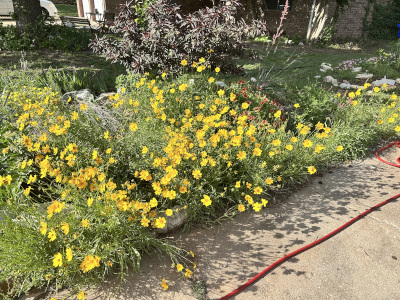
Lance-leaf Coreopsis is one of the more common and adaptable species in Norman gardens. It’s a short-lived perennial that usually lasts one to three years for an individual (personal observation). However, if they are happy they will reseed abundantly and sometimes in very different locations from where you originally placed them. Mine have migrated from a bit too much part-shade behind a redbud to the sunnier parts of the yard.
How to grow
From seeds
To sprout, these seeds require 30 days of cold stratification. It’s easy to reach that in a season by sowing in the fall (usually before December-ish). You can put seeds in the freezer for 30 days or in the fridge on a damp paper towel in a bag or sealed container for 30 days (some will begin to germinate or mold, go ahead and plant them either way).
The seedlings will come up in what we think of as winter. They should be fine with any freezes that occur so don’t worry about sheltering them unless they just came from indoor or greenhouse sprouted seedlings.
- Cold stratification: 30 days
- Fridge tested? yes, with damp paper towel
- Freezer tested? no
- Scarification: no
- Soaking needed? no
- Light needed (if yes, don’t cover): yes
- Germination season in wild? winter and spring
- Storage life? unknown
- How to tell when seeds ripe? the seeds are tan with a darker stripe. the seedheads are often still green on the outside. once the seedhead has turned completely brown, the seeds often have already fallen out.
- Native Plant Network Propagation Protocol
How many plants to seeds?
- I’ve never had just one, so I’m not sure if they need two or more to reproduce.
From plants
If you want to move plants, you can dig them when they are not blooming. The later in the spring (post March, for example, or in any weather above the 60s F), whenever you dig and move them, the plant will wilt dramatically. A week or two of consistent watering usually revives them. Once they start growing new leaves again they’re fine.
- Root type: fibrous
- Divisible: no
- Diggable: yes
- Recovers from root cut: yes
- Life span: short-lived (2 or 3 years) perennial
- Runners (stolons): no
- Underground (rhizomes): no
- Clump-forming: no
- Vogt sociability rating: 3
Where they live
Moisture
- Dry: no
- Medium dry: yes
- Average: yes
- Medium wet: yes
- Wet: yes
- Aquatic: no
- Winter flooding: no
- Spring flooding: yes
- Winter drought: yes
- Summer drought: brief
- Drought reaction: dies
Light
- Full shade: no
- Part shade: no
- Full sun: yes
Soil types
- Sand: yes
- Loam: yes
- Clay: yes
- Shallow: yes
- Containers: yes
- Rocky: unknown
- Gravel: unknown
- Potting soil: yes
- Well drained: yes
- Poorly drained: no
- Nutrient rich: yes
- Nutrient poor: yes
Disturbance
- Leaves are a bit fleshy and will look sad if you step on them
- Mowing: can be cut back severely to encourage regrowth if sprawls or done blooming
- Cut flower use: yes
- Deer resistant: no
- Rabbit resistant: presumed no from deer
- Earwig resistant: once established (personal observation)
Thatch and leafy layers
- Doesn’t seem to be able to germinate with many layers of leaves, so plant in areas where some bare ground is available (personal observation)
Temperature
- The lowest temperature I have recorded for adult plants without damage is -12 degrees F when covered by snow and 2 degrees F without snow. This is not a species I worry about covering adult plants (or outdoor-sprouted seedlings) in the winter.
Interactions with other plants
Can coexist easily with
- Ratibidia columnifera
- Gaillardia pulchella
- Callirhoe involucrata
- Oenethera speciosa
- Oenethera berlanderii
- Senna roehmeriana
- Asclepias viridis
- Invasives
- bermudagrass
- crabgrass
Even in ideal habitat, can be outcompeted by
- Helianthus maximiliani
- Datura wrightii
- Teucrium canadense
- Sorghastrum nutans
- Solidago sp Saxon
- Vernonia baldwinii
In its ideal habitat, this species can outcompete
- Oxalis violacea
- Sedum nutallii
- Sedum pulchellum
- Asclepias asperula
- Buffalograss
- Oenethera macrocarpa
Can this plant tolerate allelopathy by
- Black walnut: unknown
- Pines: unknown
- Eastern red cedars: unknown
- Invasives
- Tree of heaven: unknown
- Bradford pears: unknown
- Garlic mustard: unknown
Where can I get lance-leaved coreopsis for Oklahoma?
- Ask a neighbor if they have any!
- Dig existing seedlings in winter or late spring (they get dramatic and wilt when moved, so cooler temperatures, less wind, and late in the evening are best the later it gets).
Plants (potted or bare roots)
Oklahoma
- Lia’s Garden (Oklahoma City)
- Blue House Urban Farms (Oklahoma City), usually, contact nursery to confirm
- Native Plant Nursery (Oklahoma City)
- Prairie Wind (Purcell)
- Wild Roots
- Sanctuary Gardens
Within one state
- Missouri Wildflower Nursery: potted
- Eco Blossom Nursery (Texas)
- Painted Flower Farms (Texas)
More than a state away
- Prairie Moon: bare roots and potted
Seeds
Oklahoma
- Johnston Seed Company
Within one state
- [Native American Seed]https://seedsource.com/lanceleaf-coreopsis/)
- Buffalo Seed Company
- Missouri Wildflower Nursery
More than a state away
- Prairie Moon
- Prairie Legacy Inc
- Prairie Nursery
- Seed Savers Exchange
- Native Seed Search
Find more photos and information
- North Carolina Extension Service
- Missouri Botanical Garden
- Lady Bird Johnson Wildflower Center
- Wildflower Search
- Native Plant Network Propagation Protocols
- Arkansas Native Plant Profiles
- Wikipedia
- Flora of North Central Texas Flora, page 342
- North Central Texas Wildflowers, page 74 (Curry 2023)
- Flora of Oklahoma, 3rd Edition, page 84
Coreopsis tinctoria
This is an annual. It needs low competition to grow, so I have generally failed to get it to come up when I have sowed it in a dense bermudagrass yard in the past. If you’ve grown it, tell me more please.
How to grow
From seeds
- Cold stratification: no
- Fridge tested? no
- Freezer tested? no
- Scarification: no
- Soaking needed? no
- Germination season in wild? [fall] (https://npn.rngr.net/renderNPNProtocolDetails?selectedProtocolIds=asteraceae-coreopsis-399&referer=wildflower)
- Storage life? 3 to 5 years at least
- How to tell when seeds ripe?
- Native Plant Network Propagation Protocol
How many plants to make seeds?
- Can self (need more than one to make viable seeds): unknown
- Separate male and female flowers on different plants: unknown (look up?)
From plants
Details about dividing or planting that are beyond the points below.
- Diggable: yes
- Root type: fibrous?
- Divisible: yes
- Recovers from root cut: unknown, probably
- Life span: annual to short-lived (2 or 3 years) perennial
- Runners (stolons): no
- Underground (rhizomes): no
- Clump-forming: yes
- Vogt sociability rating: unknown
Where they live
Moisture
Lady Bird Johnson Wildflower’s species account says moist soil only, and high water needs. Missouri Botanical Gardens says it is fine with dry to average. I don’t know!
Light
- Full shade: no
- Part shade: yes
- Full sun: yes
Soil types
Again, LBJ Wildflower Center says sandy and moist only, MBG says clay and rocks are fine.
- Sand: yes
- Loam: yes
- Clay: yes in one source
- Shallow: yes
- Containers: yes
- Rocky: yes
- Gravel: unknown
- Potting soil: yes
- Well drained: yes
- Poorly drained: unclear
- Nutrient rich: unknown
- Nutrient poor: yes
- Calcareous: moderate tolerance
- Acidic: unknown
- Alkaline: unknown
Disturbance
It thrives along roadsides and railroads, so I think it can take occasional mowing as long as you let it go to seed since it’s an annual.
Stepping on: unknown
Mowing: at least to keep habitat good
Cut flower use: yes
Deer resistant: yes
Rabbit resistant: presumed yes because deer
Earwig resistant: unknown
Thatch and leafy layers
- A disturbance annual, so plant in areas where some bare ground is available
Temperature
I haven’t grown these successfully yet and need to try again.
- Lowest temperature recorded for adult plants (including rosettes) without damage (F): unknown (covered)
- Lowest temperature recorded for adult plants (including rosettes) without damage (F): unknown (uncovered)
- Lowest temperature recorded for adult plants (including rosettes) with damage (F): unknown (covered)
- Lowest temperature recorded for adult plants (including rosettes) with damage (F): unknown (uncovered)
Interactions with other plants
Can coexist easily with
- Need to investigate more
Even in ideal habitat, can be outcompeted by
- Most perennials
In its ideal habitat, this species can outcompete
- Probably shorter annuals
Can this plant tolerate allelopathy by
- Black walnut: unknown
- Pines: unknown
- Eastern red cedars: unknown
- Invasives
- Tree of heaven: unknown
- Bradford pears: unknown
- Garlic mustard: unknown
Does it need neighbors?
- Parasitic plant? no
- Will flop without neighboring plants or support? sometimes
Where can I get?
- Ask a neighbor if they have seeds or seedlings!
Plants (potted or bare roots)
Oklahoma
- Lia’s Garden (Oklahoma City)
- Blue House Urban Farms (Oklahoma City)
- Wild Roots (Choctaw)
- Sanctuary Gardens (Norman)
- Prairie Flora Co (Oklahoma)
- Midwest Propagation Nursery (Oklahoma City)
- Across The Prairie
- All Tomorrow’s Prairies
- Native Plant Nursery (Oklahoma City)
- Prairie Wind (Purcell)
- Mann’s Greenhouses (Pollinators and Prairies)(Oklahoma City)
- Bustani Plant Farm(Stillwater)
- Sustainable Garden Solutions
- Owl Creek Farms
Within one state
More than a state away
Seeds
Oklahoma
Within one state
More than a state away
Find more photos and information
- North Carolina Extension Service
- Missouri Botanical Garden
- Lady Bird Johnson Wildflower Center
- Wildflower Search
- Native Plant Network Propagation Protocols
- Arkansas Native Plant Profiles
- Calscape Profile
- Grow Native! Profile
- OSU Extension Service Profile
- NPSOT Profile
- Central Texas Gardener
- Kansas Wildflowers and Grasses
- Other relevant entries
- Wikipedia
- Flora of North Central Texas Flora, page 342
- North Central Texas Wildflowers, page 75 Curry (2023)
- Flora of Oklahoma, 3rd Edition, page 84
Other species
to be added (C auriculata, C palmata, C grandiflora, C verticillata, etc)
What is the function of Coreopsis in the ecosystem…
in Oklahoma?
- Visited by many pollinators such as butterflies, moths, bees, wasps, and flower flies.
- Birds will eat the dried seeds.
in general?
- Bugguide.net search for “coreopsis” in images, guide pages, and comments
- HOSTS Data Portal search for “coreopsis”
- Encyclopedia of Life entries by species (most contain food web illustrations)